

Why Your Home Looks Older Than It Is And the Three Things Making It Worse
A property can be structurally sound, well maintained internally and free from major defects, yet still appear tired, dated or neglected from the outside.
First impressions play an important role in how a property is perceived. Whether a home is being prepared for sale, marketed to prospective tenants or simply maintained as a long-term investment, exterior condition contributes significantly to kerb appeal and perceived value.
In many cases, the factors that make a property appear older than it really is are not major structural defects or expensive renovation issues. Instead, they are routine maintenance concerns that develop gradually over time and often go unnoticed until their visual impact becomes difficult to ignore.
Three of the most common causes are roof deterioration, neglected guttering and poorly maintained windows. Addressing these areas can significantly improve appearance while helping to prevent more costly maintenance issues from developing in the future.
Why Exterior Problems Often Go Unnoticed
One of the challenges of property maintenance is that gradual changes are rarely obvious.
Moss develops slowly across roof tiles. Dirt accumulates on window frames over months and years. Guttering becomes increasingly blocked as debris builds up season after season. Because these changes occur incrementally, they often escape attention.
Viewed from a fresh perspective, however, these issues can have a significant impact on overall appearance. Estate agents, prospective buyers and visitors often notice exterior defects immediately, even when they have become largely invisible to those who see the property every day.
As a result, relatively minor maintenance issues can have a disproportionate effect on kerb appeal.
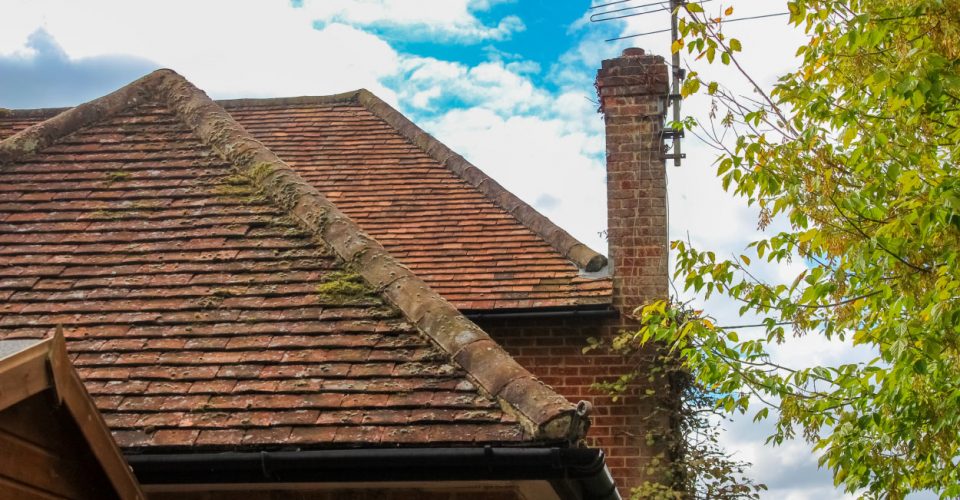
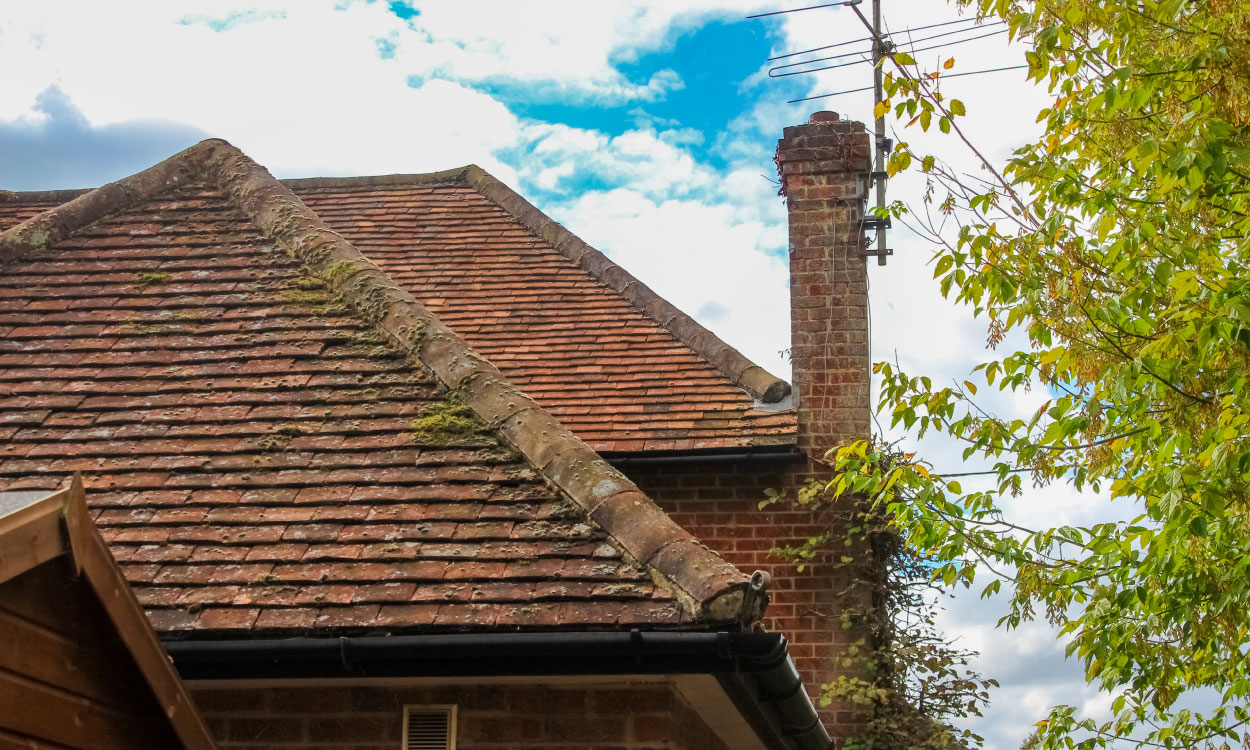
A Roof That Has Been Left to the Elements
The roof is one of the most exposed components of any property.
Throughout the year it is subjected to rain, frost, ultraviolet exposure, wind and biological growth. Over time, these factors contribute to gradual deterioration that affects both appearance and performance.
Common signs of roof neglect include:
- Moss growth across roof surfaces
- Algae and lichen staining
- Cracked, slipped or damaged tiles
- Blocked valleys and flashing details
- General discolouration caused by weathering
Heavy moss growth can make an otherwise well-maintained property appear significantly older. Beyond aesthetics, moss retains moisture against roofing materials, potentially accelerating deterioration and reducing the lifespan of roof coverings.
Research within the building industry has shown that biological growth can contribute to increased moisture retention on roof surfaces, creating conditions that may lead to premature degradation if left unmanaged.
Regular inspections remain one of the most effective ways to identify problems before they require costly repairs. Properties showing signs of roof deterioration should be assessed by a qualified roofing contractor. Companies such as Norwich-based roofers Point Roofing can help identify issues such as damaged tiles, excessive moss growth and deteriorating flashing before they develop into more significant problems.
Gutters That Are Damaging Kerb Appeal
Guttering performs a straightforward but essential role by directing rainwater safely away from the building envelope.
When gutters become blocked with leaves, moss and debris, water can overflow onto walls, fascias and surrounding surfaces. The resulting staining and moisture damage can have a considerable impact on the appearance of a property.
Common consequences of neglected guttering include:
- Dark staining on render, brickwork and cladding
- Damp patches beneath gutter runs
- Sagging or distorted gutter sections
- Vegetation growth within the gutter system
- Damage to soffits and fascia boards
These issues are often highly visible from the street and can quickly create the impression of poor maintenance.
Routine gutter clearance remains one of the most cost-effective forms of preventative property care. Most residential properties benefit from cleaning at least twice annually, particularly during spring and autumn when debris accumulation tends to be greatest.
Regular maintenance can prevent a wide range of avoidable defects. Companies such as Norwich Gutter Cleaning frequently encounter systems that have been left unattended for several years, resulting in staining, moisture-related issues and unnecessary repair costs.
Windows That Have Lost Their Impact
Windows play a central role in the overall appearance of a property.
Even when external landscaping, paintwork and roofing are well maintained, dirty windows can diminish the visual appeal of the entire building.
While routine household cleaning may remove surface dirt, it often fails to address the build-up of environmental contaminants that accumulate over time.
Common issues affecting window appearance include:
- Grime accumulation on external glazing
- Hard water staining
- Oxidisation of uPVC frames
- Dirt build-up around seals and sills
- Algae and mildew growth in corners and joints
Over time, these issues can reduce natural light reflection, create a dull appearance and make a property appear older than its actual age.
Kerb appeal studies consistently highlight the importance of clean windows in shaping perceptions of property condition and overall maintenance standards.
For properties affected by staining, environmental deposits or frame discolouration, Professional window cleaning services can help restore appearance by removing contaminants that are difficult to tackle using standard household cleaning methods alone.
The Combined Effect
Each of these maintenance issues can affect appearance individually.
However, when roof staining, overflowing gutters and dirty windows occur simultaneously, the cumulative effect can be substantial.
A relatively modern property can appear significantly older simply because routine exterior maintenance has been overlooked. Moss-covered roof surfaces, stained walls caused by overflowing gutters and dull window glazing combine to create an impression of neglect, even where the structure itself remains in excellent condition.
Importantly, these are not typically renovation issues. They are maintenance issues.
Addressing them often delivers one of the most noticeable improvements in kerb appeal without the need for extensive refurbishment or significant expenditure.
Preventative Maintenance vs Reactive Repairs
Many exterior maintenance issues begin as minor concerns before gradually developing into more expensive problems.
Blocked gutters can contribute to damp penetration. Persistent roof moss can accelerate tile deterioration. Neglected window frames can suffer long-term staining and weathering.
A proactive maintenance strategy helps reduce these risks while preserving appearance and protecting property value.
Recommended maintenance intervals include:
- Annual roof inspections
- Gutter cleaning twice per year
- Regular professional window cleaning
- Prompt repair of minor defects
- Visual inspections following severe weather events
Routine maintenance costs are typically far lower than the cost of reactive repairs once damage has occurred.
Industry estimates regularly suggest that reactive property repairs can cost several times more than preventative maintenance programmes, particularly where water ingress or prolonged deterioration is involved.
Final Thoughts
A property does not require major renovation work to appear well maintained.
In many cases, the difference between a property that appears dated and one that feels cared for comes down to consistent attention to a handful of key exterior elements.
Roof condition, gutter maintenance and window cleanliness are often overlooked because deterioration occurs gradually. Yet these remain among the most influential factors affecting kerb appeal, property presentation and long-term maintenance costs.
Regular inspections, routine maintenance and early intervention can help preserve appearance, protect value and reduce the likelihood of more costly repairs in the future.
When viewed collectively, these relatively simple maintenance tasks often deliver one of the highest returns on investment available in residential property upkeep.
