

Can You Put Solar Panels on a Flat Roof?
With an increasing focus on renewable energy in the UK and across the world, solar panels have become a more popular home improvement choice. No matter what type of property you live in, you might be considering installing panels. A common query people have is whether your roof can have solar panels installed on it – especially if the roof is flat.
The good news is that, in most cases, you can install solar panels on almost any roof provided the structure is solid enough. In this article, we’ll take a closer look at how solar panels work on flat roofs.
Read on for more information…
Benefits of solar panels for your home
Solar panels offer a wide range of advantages for UK homeowners, including:
- Lower energy bills: Solar panels generate more electricity from sunlight, and this reduces your dependence on the National Grid. As a result, your energy bills will likely be reduced.
- Government incentives: Excess electricity can be sold back to the grid, which helps you earn money.
- Energy independence: Generating energy from your own source protects you from fluctuating energy prices.
- Reduced carbon footprint: Solar energy is renewable and clean, which means you are reducing the amount of carbon emissions your home is releasing.
- Low maintenance – Once installed, solar panels require minimal upkeep and often last for decades.
Can you put solar panels on a flat roof?
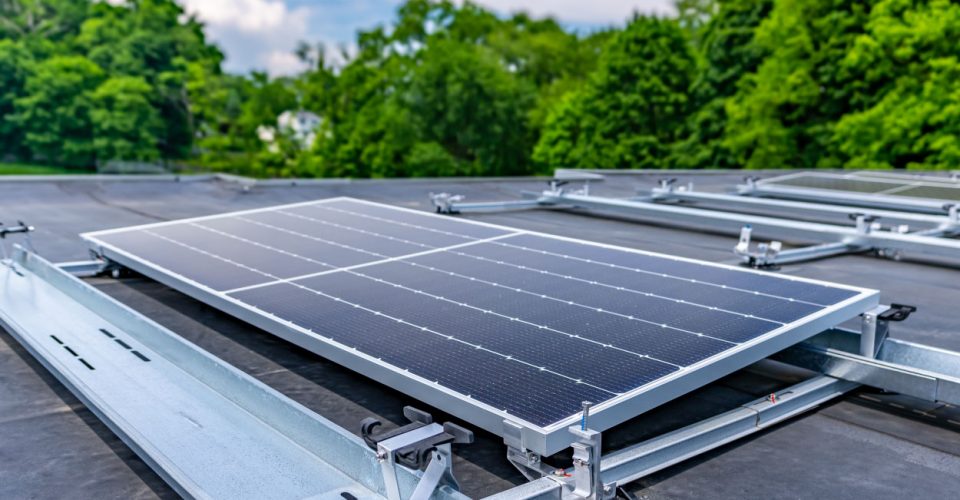
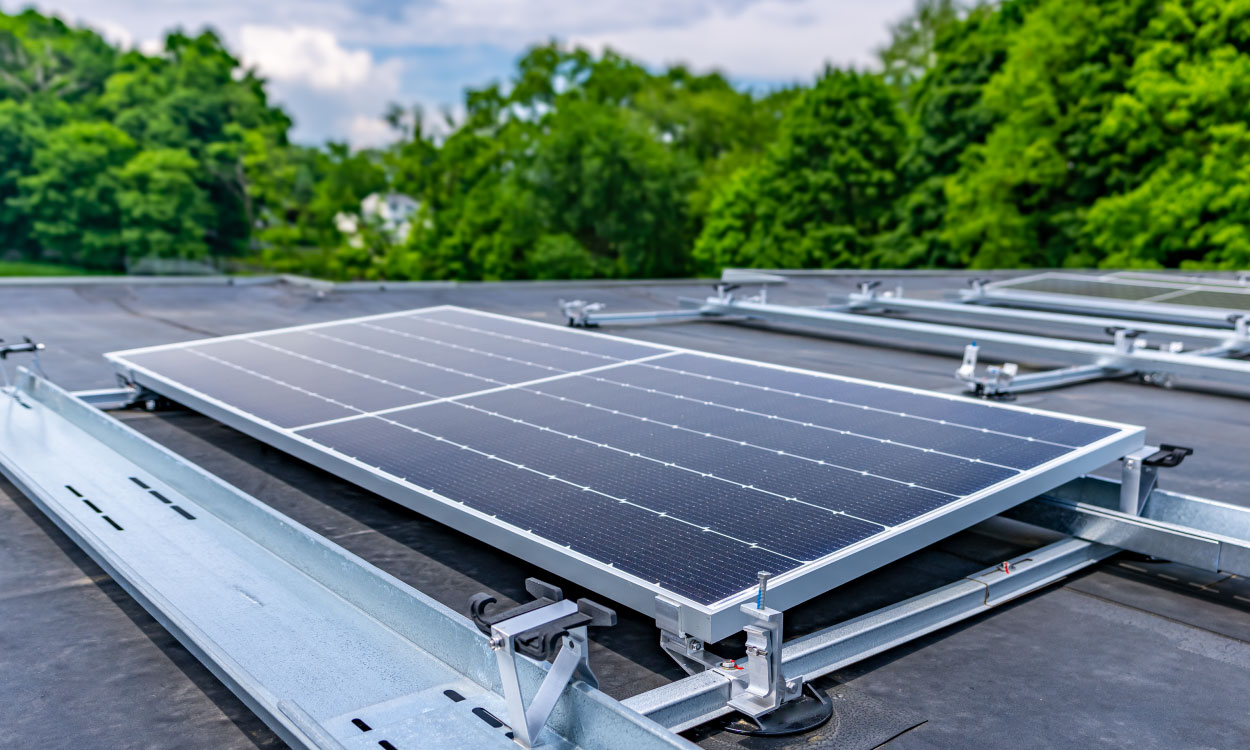
Yes, you can install panels on a flat roof. While most people associate solar installations with sloped or pitched roofs, flat roofs are also a great option that provides additional flexibility. Many UK homes, especially in urban areas, have flat roofs, and these days, panels can easily be installed upon them.
The key lies in how the panels are positioned. Flat roofs don’t naturally face the sun like other roof types, so solar panels will be mounted with angled frames to ensure they capture as much sunlight as possible throughout the day. When set up correctly, there is no reason why a flat-roof solar panel can’t generate just as much energy as other types.
Types of solar panel mounting systems for flat roofs
There are several mounting options available for flat-roof solar installations. Each offers a different approach, and which type is suitable will depend on the specifics of your roof’s structure.
The most common systems include:
East/west mounting systems
These systems position panels in pairs facing east and west rather than south. This configuration maximises electricity production throughout the day and allows for a compact, symmetrical design that makes excellent use of all the space on the roof.
Ballasted south-facing roof mounts
These systems use ballast (heavy weights) instead of roof penetrations to hold the panels in place. They’re ideal for roofs that can support the additional weight, and they minimise the risk of leaks since no drilling is required. The panels face south at an optimal angle to catch maximum sunlight.
Flat trapezoidal roof mounts
These mounts are attached directly to trapezoidal metal roof sheets. They provide excellent stability and are lightweight compared to ballasted systems, making them suitable for large-scale installations.
Console bins
Console bins, or tray mounts, are pre-angled plastic containers that hold the panels in place. They’re quick and easy to install and extremely cost-effective.
Pros of solar panels on a flat roof
Installing solar panels on a flat roof offers a whole host of advantages, including:
- Discrete aesthetic: Panels on flat roofs are usually out of sight from street level, maintaining your property’s visual appeal.
- Optimal sunlight exposure: Panels can be positioned at the perfect tilt and direction to maximise the amount of sunlight they receive.
- Easy to install: Flat roofs make it safer and simpler for installers to work, and ongoing maintenance is easier too.
- Flexible layout: Installers can design the array to fit your specific roof shape and size.
Cons of solar panels on a flat roof
However, there are also several drawbacks to consider before going ahead:
- More expensive: The frames and ballast systems used on flat roofs can sometimes mean installations of this kind are more expensive.
- Needs more space: Panels need to be spaced apart to prevent shading from one another, which reduces the total capacity.
- Sometimes too heavy: Ballasted systems can be heavier than standard solar panels. This means the roof structure must be strong enough to support them.
- Sometimes less efficient: If the panels aren’t angled correctly, they might generate slightly less electricity compared to those installed on pitched roofs. They are also more likely to overheat, which impacts efficiency.
- More maintenance: Flat roofs may collect debris or water around the mounts, meaning more maintenance is needed compared to other systems.
What is the best angle for solar panels?
The best angle for solar panels on a flat roof in the UK is between 30 and 40 degrees. This ensures the panels capture the maximum amount of sunlight throughout the year, taking into account the country’s seasonal sun path.
If your roof design or location doesn’t allow for this exact tilt, there’s no need to worry. Most modern solar technology can still optimise energy generation effectively. Reputable installers will always make sure the panels are efficiently set up for your specific property.
Do you need planning permission to put solar panels on a flat roof?
Since 2023, most domestic solar panel installations in the UK do not require planning permission. This means homeowners can usually install solar panels without any formal approval, as long as certain conditions are met.
However, there are exceptions, and you should double-check your property’s requirements before proceeding with the work. This is particularly the case if you are located in a conservation area or live in a listed building.
Whether you’re motivated by reducing bills, cutting your carbon emissions or just want to increase your home’s value, investing in solar panels is a smart, future-proofing measure for any home. This includes if you live in a building with a flat roof. Just make sure you choose a trusted installer and check your roof’s condition in advance.
